Sunday, August 11, 2013
Reacting to D23's Disney Live Action Film Panel
This weekend the Anaheim Convention Center hosted Disney's fan convention D23 across the street from Disneyland.
In the convention center's arena fans where treated to a star studded presentation that included trailers, rough cuts and behind the scenes footage of some of Disney's upcoming slate of films.
There are plenty of stories out there that give you a proper news accounting of the event an even complete dialogue from the scenes shown, so instead I am going to focus on some impressions about what we saw.
Admittedly I am not the biggest Disney nerd, I enjoy the films, have visited Disney World multiple times, but I could really appreciate the passion that hardcore Disney fans have for the company because we Star Wars fans are the same way about Star Wars and Lucasfilm. The panel was hosted by Walt Disney Studious Chairman Alan Horn and featured Marvel Studios President Kevin Feige and Disney Live Action Production President Sean Bailey.
Horn kicked the show off by detailing the history of Disney's growth, celebrating the acquisitions of Pixar, Marvel and Lucasfilm. He related some interesting personal stories about how his proposal to his wife involved Bambi and how he got a speeding ticket following the 1977 premiere of Star Wars attempting to reach lightspeed.
Lucasfilm was clear going into D23 not to expect any news regarding future Star Wars projects and Alan Horn reiterated what has already been disclosed about the crew working on Episode VII and had some kind words for Lucasfilm President Kathleen Kennedy. Just as a reminder to fans, they are still working on the Episode VII script. Nothing has been shot for the film yet, so expecting a reveal of anything significant seems unrealistic.
What we did see was footage some of which was shown at San Diego Comic-Con and some of which was new.
Marvel Slate:
The Marvel presentation showed us a first look and trailer for Thor: The Dark World (11/8/13) an featured appearances by Natalie Portman, Anthony Hopkins and Tom Hiddleston. The extended look focused on a battle in which Thor takes down a giant rock troll. We also got to see Jane going to Asgard and Portman showing off her comedy chops interacting with Odin.
From the look of the film, Thor will be a lot of fun. The trailer did seem to reveal that Thor is going to have a very rough film.
The Captain America: The Winter Soldier (4/4/14) presentation featured an appearance by Chris Evans (Captain America), Anthony Mackie (Sam Wilson / The Falcon), and Sebastian Stan (Bucky Barnes / Winter Soldier). It featured two scenes Cap in an elevator and Cap on a mission boarding a freighter as well as a trailer. The first thing that pops out from these clips was that Winter Soldier will be a much darker Captain America. The uniform has been updated with a much darker and more subdued color pallet. The scene in which we see Cap boarding the freighter we see a level of violence and bodily injury caused by the character that to me indicates Cap may be losing his way early in the film as he attempt to adjust to modern realities. I will say I loved the comedic interaction between Evans and Johansson as the Black Widow spends the mission trying to set Cap up on a date.
Marvel's Kevin Feige seemed especially excited for Guardians of the Galaxy (8/1/14) and after seeing the clip we did I can see why. I have zero familiarity with the comic book, but this looks like a fun story. We are introduced to the Starlord (Chris Pratt). We then saw an extended sequence set in a prison where John C. Reilly as Rhomann Dey puts each one of the films main characters through a futuristic mugshot/lineup. The entire clip is set to the song "Hooked on a Feeling," which adds a very whimsical feeling to what appears to focus on a prison riot. I loved the absurdity of Rocket Raccoon and I can't wait to see more of this film.
A the end we got a very brief teaser of Ultron's head being formed while audio played from previous movies, and the shot of the title logo for Avengers 2.
Disney Nature Slate:
Disney series of animal focused nature films is returning with Bears (4/18/14). The film appears beautifully shot and follows a family of bears, from when the cubs are born to the challenges the family faces. It was announced that the National Park Foundation will receive a portion of the ticket sales for the first week of the films release.
Disney Studios Slate:
The Walt Disney Studios slate featured Muppets Most Wanted (3/21/14), Into the Woods (12/25/14), Cinderella (3/13/15), Malieficent (7/2/14), Tomorrowland (12/12/14), and Saving Mr. Banks (12/20/13).
Ty Burrell appeared on stage and Tina Fey appeared via video for the Muppets segment, Kenneth Branagh appeared via video for the Cinderella segment, Angelina Jolie appeared for Malieficent, Brad Bird and Damon Lindelof for Tomorrowland and PJ Novak and Jason Schwartzman appeared for Saving Mr. Banks.
Of all these films Tomorrowland described as a mystery-adventure has me most intrigued. We were shown a short "found" animated clip that seems to reveal a bit about the film. To me this smells like a combination of LOST and The League of Extraordinary Gentleman. There are indications of a secret society of scientists and a secret project underneath the 1964 World's Fair It's a Small World ride. Bird and Lindelof had a lot of fun showing off contents of an old box and may have put the Disney PR folks out of work by coming up with "dusty old box and crappy old sound" as a marketing campaign for the movie.
Malieficent looks like a real trip and if executed right promises to put Sleeping Beauty in a different perspective, after all every character is the hero of their own story.
The film that most surprised me is Saving Mr. Banks. Emma Thompson as P.L. Travers is tremendous and has great chemistry with Hanks. The added benefit of co-starring Bradley Whitford makes this a film that while I wasn't planning on seeing it, is one that I think will be too much fun to miss.
The show closed with a live performance of Let's Go Fly a Kite by Schwartzman and Novak with a suprise appearance by Richard Sherman. The performance and reception that Sherman received was a lot of fun to see.
Friday, August 9, 2013
The Vision Thing: What Lucasfilm can learn from Marvel Studios
The stewardship of Marvel Studios by President Kevin Feige has been a resounding success. It shouldn't be seen as a coincidence that Feige went into this with a long term plan and continues to form long term plans for the future of Marvel Studios and it's film franchises.
As Abraham Lincoln said "Give me six hours to chop down a tree and I will sped the first four sharpening the axe." The importance of having a plan and a vision is key. While a great deal of the success of Marvel's The Avengers film can be attributed to planning, execution, adaptability and luck also play a major role in this. Picking the right people to execute the plan is just as important as having a plan. The two most obvious examples from Marvel Studios is the decision to cast Rober Downey Jr. as Tony Stark/Iron Man and the decision to hire Joss Whedon to write and direct The Avengers. The massive success of Iron Man provided validation for Feige's vision and allows Marvel to continue following it's plan. Success breads confidence and opportunity, the success of The Avengers allows Marvel to take on more risk as it attempts to expand it's stable of cinematic characters and franchises.
From comics to film vs. from film to film:
It is important to remember that Marvel and Star Wars are fundamentally different properties. Marvel at it's core is a comic book company. Comics are cyclical storytelling vehicles, where stories run guided by a single writer or series of writers for a limited period of time and then very often end and begin again. This cycle of character origin, growth, decline/death and re-birth happens across the industry on widely varying timelines. The nature of the story telling results in not only numerous characters but also numerous incarnations of the same characters. This does allow continuity to exist but said continuity can be very fractured.
While Marvel Studios is using characters and stories that originated in it's comics, it is crafting a series of films that fit together in their own continuity, there is an internal consistency within the film universe. This universe is created as the individual character films tell their stand-alone stories, set up their own sequels but also set up the larger cross-franchise story of the Avengers.
Star Wars at it's core is a film property. While it has birthed an Expanded Universe of comics and novels and other story telling mediums, the focus of the franchise is cinematic. George Lucas has borrowed from the Expanded Universe, particularly the comics bringing them into the Prequels as well as The Clone Wars series. As an already established film franchise spanning over 30 years, there is already an established film continuity that is guiding Star Wars storytelling. This is vastly different then some of the haphazard films produced featuring Marvel characters in the 1980's and 1990's.
Instead of moving on from Episodes I-VI and rebooting the Star Wars franchise, it appears that Lucasfilm is embracing it's cinematic continuity and building upon it. I believe this approach creates a richer experience for fans but creates a more challenging situation for storytellers. It is often commented that the world J.R.R. Tolkien created for The Lord of the Rings is one of the richest and most nuanced examples of world-building that we have in fiction. I would assert that the Star Wars universe is the richest and deepest fictional universe ever created.
Structuring the film franchises:
At the same time it is important to remember that Star Wars and Marvel are structuring their movie plans in what appears to be fundamentally different ways.
From all that has been revealed so far about plans and rumors regarding the Star Wars films is that we will get a new Sequel Trilogy. In the years between these films it has been announced that Disney is planning to release stand alone Star Wars films. Speculation is that these will be a story focusing on a young Han Solo as well as a movie focusing on Boba Fett. If these rumors are accurate we will be seeing films that are set in the Star Wars universe but would not be serving the same role as the Marvel character franchise films. The Star Wars stand-alone films would not be used to further the overall saga story line. At the same time Star Wars is ahead of Marvel at joining it's television universe and it's cinematic universe's together. George Lucas as the driving force behind both the first six films as well as The Clone Wars series and the now on the shelf Live-Action series provided story telling across the theater and television screens that were all part of the same grand story. Marvel is just beginning to do this with it's new Agents of S.H.I.E.L.D. on ABC.
So if the Star Wars saga and stand-alone films are not going to all tie together in a larger story arc as tightly as Marvels franchises, it presents a different challenge that perhaps speaks to a different plan for executing and structuring the future of the Star Wars franchise.
If you look at the structure of the way Lucasfilm is handling it's television and film properties it may be telling. Word of the Lucasfilm "Story Group" as well as the announced involvement of certain individuals working on multiple projects provides for a sort of storytelling cross-pollination.
Episode VII, VIII and IX (Released between 2015-2021)
On Episode VII we have Kathleen Kennedy as an Executive Producer, J.J. Abrams as Director and producer, Bryan Burk (from Abrams' Bad Robot) as a producer. We have Michael Arndt writing and we have Lawrence Kasdan, Simon Kinberg and George Lucas serving as creative consultants. Kennedy revealed at Celebration Europe that she is very involved in the writing process as they refine the script for Episode VII.
Star Wars Rebels (Premiering Fall 2014)
For Rebels we have three co-executive producers in Dave Filoni, Greg Weisman, and Simon Kinberg.
Filoni and Weisman both come from television animation backgrounds whereas Kinberg's experience is as a writer and producer for feature films. It isn't yet clear how involved Kennedy is or will be on the series, but presumably the majority of her focus will be on the feature projects.
Stand-Alone Films (Between Between Saga Episodes)
We assume we are getting at least two stand-alone films, Disney CEO Bob Iger has confirmed those plans to release these movies between Episodes VII, VIII and IX.
Writing these stand alone films will be Simon Kinberg and Lawrence Kasdan and reportedly J.J. Abrams will serve as a consultant on these films.
Unannounced Animated Feature (Unknown Release Date)
We know Lucasfilm is also working on an unannounced animated feature film project directed by Gary Rydstrom, with Kennedy presumably as executive producer, and potentially written by Irene Mecchi with Brenda Chapman getting either a consulting or writing credit on the film. It isn't clear if this project is Star Wars related.
Conclusions:
It is important to note that both Feige and Kennedy are producers having production experience in both television and film. I believe that Kennedy's role as President of Lucasfilm because of the other companies that fall under her domain may be forced to delegate the development of the Star Wars brand a bit more then Feige has to at Marvel Studios. It seems clear that the workload necessary to run Lucasfilm as well as be the creative lead on a Star Wars trilogy is a terribly difficult task and one of the reasons it took George Lucas so long to make the Prequels and contemplate making the Sequels.
It looks like what Kennedy and her team have assembled at Lucasfilm, between the creation of the Story Group and the involvement of individuals on multiple projects is to create a connective tissue that will ensure that the overall story and continuity will mesh. The new films must have that Star Wars "feel" to them, a lived in universe that mixes the grander heroic themes and archetypes with sci-fi action, humor and romance.
Outside of Kennedy herself it appears that the guy to really keep an eye on at Lucasfilm is Simon Kinberg who seems to have a hand in every project. It makes me wonder if Kinberg is serving a role to Kennedy similar to what Rick McCallum did for so many years for George Lucas.
So as we look at it what Lucasfilm can learn from Marvel in the broadest terms is to have a clear overall plan mapped out. Feige has revealed that in 2006 Marvel Studios was already planning out it's various film "phases" and projects until 2015 and currently they are planning out until 2021. Not only does this give the company a road map from which to proceed it also has the ancillary benefit of reassuring fans and exciting fans. Fans want to know that when they are emotionally investing in characters that they will see those characters' stories continue.
This plan doesn't need to be publicly revealed but it should be as forward reaching as possible. It also should accept the fact that some projects may not work as well as others. Marvel didn't allow the difficulties with The Incredible Hulk star Edward Norton and having to recast the character derail it's larger plans for The Avengers. There will be Star Wars films that preform less well as The Clone Wars theatrical premiere demonstrated. You have to trust the plan. If an element of the plan isn't working you have to figure out a way to work around that and be willing to make some hard and expensive choices.
What Star Wars can't do is simply copy the Marvel model. The linkages that Marvel has created in it's movies provides a narrative momentum. Star Wars storytelling whether in comics, books or television has often been non-linear. We jump back and forth in the timeline and if the new stand-alone movies follow this pattern they can't really be used to connect Episode VII to Episode VIII or Episode VIII to Episode IX. As a new Star Wars continuity develops, what the stand-alone films and television vehicles can do for the franchise is to provide depth and breadth to the universe, similar to what the comics and novels did. The difference being that with tighter narrative control by the Story Group and the creators involved we should get a new continuity that is far less messy and takes the Star Wars universe in new and interesting directions.
Tuesday, August 6, 2013
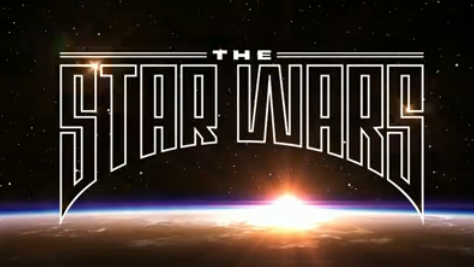
The Star Wars: Previewing Dark Horse Comics New Mini-Series
Character names, settings and themes may be familiar but this is definitely it's own story and I for one am very excited to get a chance to see this series. It is written by Lucasfilm executive editor and author J.W. Rinzler with artwork by Mike Mayhew.
| Looks a bit like George doesn't he? |
| Starkiller is a pretty cool name. |
| Darth Vader, 95% less melted. |
| I don't think Leia would kiss that. |
| Is that Maisie Williams? |
Gather around and let Grandpa tell you a little story about the early days of the Internet. When dial-up modems ruled the day and AOL was just beginning to hit it's stride the Internet was very much a textual creature. When one picture took 5 minutes to download this makes a lot of sense and forget about instant HD video streaming. One of the first things I remember "finding" on the Internet was a seemingly legitimate early draft of Star Wars. At this point I can't remember what version it was, but I clearly remember carefully printing it out and putting it in it's own special binder. Star Wars was such compelling story that even as a child I was voracious for any bit of information that would give me greater insight into the story and the mythology that George Lucas had crafted.
In Dark Horse's announcement of the project, J.W. Rinzler the series' writer talks about stumbling upon the script,
“While researching in the Lucasfilm Archives I’ve found many treasures—but one which truly astounded me was George’s rough draft for The Star Wars. His first complete imaginings were hallucinating to read—mind blowing,” said writer J.W. Rinzler. “While working with George on another book project, I once asked if we could adapt his rough draft. He was hesitant. Years later, with Dark Horse’s invaluable help, we showed him a few drawn and colored pages of what it might look like. He gave us the okay.”
Series editor Randy Stradley seems to have been as captivated as I was by the script.
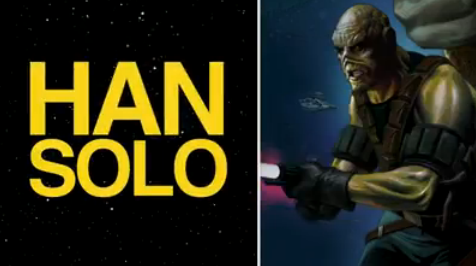
“I’m not sure where I first read about The Star Wars—it was years and years ago—but the idea of Luke Skywalker being an older Jedi General, and Han Solo being a six-foot-tall lizard, turned my Star Wars fan brain on its side. I always assumed this would be one of those stories that would be ‘lost to history,’ so getting to work on bringing it to life is kinda like a dream come true.”Though I think series artist Mike Mayhew may sum it up best in his comments to USA Today when he simply says, ''this is the greatest 'what if?' story ever in comics."
From what we have seen of the series so far by way of panel artwork there is a very captivating visual style being employed by Mayhew that I think is going to look absolutely gorgeous in print as well as on digital devices. Feast your eyes on a few more images.
| Fighter-sized Star Destroyers |
| YES! |
| Is that Emperor Palpatine or Ming? |
| Not Darth Vader, but still pretty scary. |
| The Space Fortress |
The Star Wars #1 will be released on September 4, 2013 with cover art by Nick Runge, with a variant cover by Jan Duursema, and an Ultravariant cover by Doug Wheatley. The Star Wars #2 will be released on October 2, 2013 and both are available for pre-order now.
![]() |
| The Star Wars #1 |
![]() |
| The Star Wars #2 |
Below is what would have been the opening crawl to The Star Wars, click on it to read a text file of the script.
FADE IN:
1. SPACE
A sea of stars is broken by the vast blue surface of the planet, Utapau. Five small moons slowly drift into view from the far side of the planet. The main titles are followed by a roll-up:
Until the recent Great Rebellion, the Jedi Bendu
were the most feared warriors in the universe.
For one hundred thousand years, generations of
Jedi perfected their art as the personal bodyguards
of the emperor. They were the chief architects of
the invincible Imperial Space Force which expanded
the Empire across the galaxy, from the celestial
equator to the farthest reaches of the Great Rift.
Now these legendary warriors are all but extinct.
One by one they have been hunted down and
destroyed as enemies of the New Empire by a
ferocious and sinister rival warrior sect, the
Knights of Sith.
A small silver spacecraft emerges from behind one of the Utapau moons. The deadly little fightercraft speeds past several of the moons, until it finally goes into orbit around the fourth moon...SOURCES: USA TODAY and Darkhorse.com
Saturday, August 3, 2013
The Clone Wars Bonus Content News & Rumors: Is This Cad Bane's Ship?
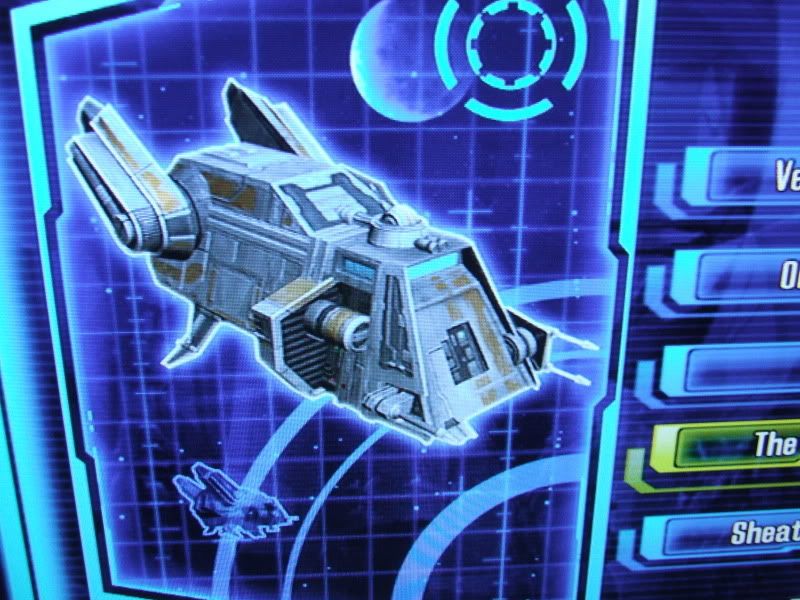
Star Wars: The Clone Wars supervising director and Star Wars Rebels co-executive producer Dave Filoni revealed at Star Wars Celebration Europe that bounty hunter Cad Bane's ship would appear in The Clone Wars' "bonus content."
The new ship pictured above has a very lean and mean look to it. It looks like an aggressive and attack vessel. It is also a serious departure from the concept art for Cad Bane's ship that was developed in 2009 for the Republic Heroes video game.
Concept art from artist Jeremy Love (aka Coldrum) worked up concept art on a ship for Cad Bane. Love worked on Star Wars: The Force Unleashed, Star Wars: The Clone Wars: Republic Heroes, and Star Wars: The Clone Wars: Lightsaber Duels.
It is interesting to note that it has a similar color scheme and design elements as the previously shown main character's ship from Star Wars Rebels, called the "Ghost." The yellow paint, angular lines and top blaster canon turrets all have similar looks between the two ships.
The new ship pictured above has a very lean and mean look to it. It looks like an aggressive and attack vessel. It is also a serious departure from the concept art for Cad Bane's ship that was developed in 2009 for the Republic Heroes video game.
Concept art from artist Jeremy Love (aka Coldrum) worked up concept art on a ship for Cad Bane. Love worked on Star Wars: The Force Unleashed, Star Wars: The Clone Wars: Republic Heroes, and Star Wars: The Clone Wars: Lightsaber Duels.
![]() |
| The Slight of Hand |
| Star Wars Rebels ship, the Ghost |
A poster on the message board Brick Horizon says that the ship is viewable in a Clone Wars demo game on the Playstation and that the ship is called the "Slight of Hand." The name of the ship is confirmed by the artist in his description of the artwork.
It will be interesting to see of Bane's ship retains the "Slight of Hand" moniker or if the ship will receive a new name.
Binding the Galaxy Together: A Look at the Lucasfilm "Story Group"
A seemingly minor bit of news out of the recent Star Wars: Celebration Europe convention was an oblique reference to something called the "story group" within Lucasfilm. If you know me at all you know that not only do I love a good story, but I am also fascinated by the creative process of writing and of collaborative storytelling. The idea that there may be significant changes in the decision making and creative processes of how the story of Star Wars is told has me very curious. It has me wondering...
What is the story group?
In interviews with some key players at Lucasfilm we get a background on how the cross division storytelling process and continuity review has worked previously. This background allows us to guess at what has changed with what appears to be this new working group across Lucasfilm's divisions.
In a 2010 interview Pablo Hidalgo, Lucasfilm's Brand Communications Manager (formerly manager of on-line content) discusses his previously informal input in the storytelling process.
On the publishing side former Lucas Licensing Executive Editor Sue Rostoni described the story creation process to EU Cantina.
The Holocron which Chee created replaced the old Star Wars bible (a set of large black binders) and contains various in-universe information broken down by subject matter of Character, Location, Alien/Creature, Technology (Droids, Vehicles, Weapons), Group/Organization, Terminology, Event, Flora, and Language. As of 2011 there was over 45,000 entrees in the Holocron. The Holocron is used by various individuals withing Lucasfilm as well as select licensees and writers.
Roqoo Depot did an excellent interview with Chee in which he details what his job is and isn't as well as his input on the creative process.

In addition to the processes they described we know that there are different story conferences that occur at Lucasfilm each year. For The Clone Wars series before a season went into production, Lucas, Filoni and other writers and production staff on the series would meet at Skywalker Ranch to break the stories and assign writing duties for episodes and story arcs to writers. On the licensing end there has been a greater push in recent years of cooperation between the comic license holder Dark Horse Comics and the adult novel license holder Del Rey. This spirit of cooperation has extended to editorial staff conferences at Lucasfilm where the staff at Lucas Licensing (LucasBooks) get together with editors from Dark Horse and Del Rey and develop story ideas and plot out the direction of the Expanded Universe.
So in the past while there were certainly organized periods of time when story telling whether it was an adult or young adult novelization of a television property like The Clone Wars, or multiple stories taking place in the same time period with some of the same characters like the Knight Errant comic and novel, we have seen cooperation between Lucasfilm, Lucas Licensing and it's licensees. What we haven't really seen is a unified storytelling vision that has been executed across all platforms.
I think some of this stems from previous leadership, where as his own privately held company, George Lucas may have allowed the licensing division to let other storytellers play in his universe, he didn't really consider that part of his story so he tolerated it's existence and sometimes enjoyed it and borrowed from it. At the same time his focus was very much on telling the stories he wanted to tell. The result is you had the storytelling in Star Wars being pulled in various directions across multiple in-universe time periods. Folks like Leland Chee played traffic cop, seeming to prevent as many crashes as possible but acknowledging that it was never going to all fit perfectly.
With the purchase of Lucasfilm by Disney and the announcement of new films and new TV ventures it created a great deal of uncertainty for the direction of future Star Wars storytelling in other formats. What seems to have developed is a bit of a holding pattern. Until it is known what exactly the Sequel Trilogy is going to do to continuity we don't really know what is going to happen to the Expanded Universe.
What is the purpose of this new "Story Group?"
Disney did not become the giant corporation that it is by being stupid. The prime revenue sources for the Star Wars property will come from feature films. Everything else is and should be secondary to the films. It also makes sense that as you attempt to attract new fans and hook them on new Star Wars stories for years to come that you would want simplify the Star Wars universe, grounding everything primarily in the first six films so that they can jump in now with Episode VII or with Star Wars Rebels and the stories will make sense and fit.
To me the indication based on the description above is that the purpose of this group is to enforce narrative or continuity discipline going forward. Which means a different emphasis in the editorial oversight from Lucasfilm and not allowing as much decision making on the licensee end of things on the direction of plots and characters.
I believe that this will have two effects in the short term. The first is that it will provide a more cohesive set of stories. The second is that we will hit a storytelling bottleneck, where the pace and number of stories released in other medium will be greatly reduced until we have a clearer picture of where the story in the films is going.
Of course the beauty of the story group is that assuming the key players on the film side of the company are part of it, it should allow the story group to have access to the film stories as early as possible which will let them commission books, comics and animation that fit with this.
There will no doubt be some conflicts as last minute edits and decisions in the films could create continuity hiccups with other materials, but no matter what system you establish that is going to occur.
What do we know about the Story Group?
At present we don't have a great deal of information about the story group.
It is not clear whether it is a formal structure within Lucasfilm or more of an informal or ad hoc working group. Based on Pablo's tweet it sounds like it is more formal than anything they have had in place in the past.
The membership of the group is also unclear. We do not know how many members the story group has or who is part of the group.
It appears that at least Pablo Hidalgo and Leland Chee are part of the group. As Senior Editor at Lucasfilm/LucasBooks Jennifer Heddle is almost certainly part of the group as well, she is the successor to Sue Rostoni and deals with both novels and comics. Simon Kinberg who is one of the three executive producers on Star Wars Rebels is also involved in the Star Wars feature films for Lucasfilm so it would make tons of sense for him to be a key figure in the story group.
Other likely names to be involved would be Michael Arndt, Lawrence Kasdan, Dave Filoni, and Greg Weisman.
At the senior leadership levels of Lucasfilm, Paul Southern is Lucasfilm's Vice President, Licensing and Consumer Products Marketing and Senior Advisor Howard Roffman (former head of Licensing) could also be part of the story group.
Additionally it could be a bit like the United Nations Security Council where there are some permanent members and some temporary members. Individuals like JJ Abrams or Kathleen Kennedy may sit in on meetings, lead a meeting or simply send a memorandum with instructions to a meeting or they could be core members of the story group. We simply don't have much information at this point.
While the exact details of the story group may not be clear at this point, or whether the Expanded Universe will survive in whole, in part or be rebooted, what is clear is that going forward Lucasfilm is making a concerted effort to ensure that all the storytellers are on the same page.
What is the story group?
@stern_man More than 140 chars allow. Nutshell: story group is about ensuring future storytelling meshes better far more than in pastBackground on Continuity and Storytelling:
— Pablo Hidalgo (@infinata) July 29, 2013
In interviews with some key players at Lucasfilm we get a background on how the cross division storytelling process and continuity review has worked previously. This background allows us to guess at what has changed with what appears to be this new working group across Lucasfilm's divisions.
In a 2010 interview Pablo Hidalgo, Lucasfilm's Brand Communications Manager (formerly manager of on-line content) discusses his previously informal input in the storytelling process.
"20. And now, fan questions. Lord Tuetanus from Durango asks, what is the editorial process for creation of new content in Lucasfilm? Continuity, magical word, how is it controlled?
If you’re referring to published, expanded universe content, then it’s really up to the editors in our Licensing group to work with the publishing partners and the authors to develop a story, and the editors and Leland Chee review the story for any new continuity, potential conflicts, or opportunities to connect to other stories. I have no formal involvement in this, but I am an occasional guest who is allowed to sit in on story conferences and offer input from time to time.
If you’re referring to the stories that come out television production, that comes out collaboration from George Lucas, Dave Filoni, and a team of writers during a story conference. They have access to all the Expanded Universe reference books during development, and will occasionally send queries to Leland and myself to see if there’s opportunity to connect with the EU. But aside from that, I have no involvement on the story side of The Clone Wars." (Source: Korpil.net Interview with Pablo Hidalgo, Nov. 2010)
On the publishing side former Lucas Licensing Executive Editor Sue Rostoni described the story creation process to EU Cantina.
"EUC (Fan Question): I was wondering if you could describe how you handle manuscripts. I don’t fully understand what happens when you get them. Do they come to you electronically, or on paper? How do you make edits? When editing, what do you look for?
SR: The manuscripts arrive electronically. In the past, I would print them out and edit on paper, but over the last few years I’ve grown fond of editing electronically. It’s easier for me and I believe I do a better job. For one, my writing gets sloppy after a few sentences and there’s never enough room in the margin or between lines to really get my thoughts out. There’s no limit to my verbosity when editing electronically. So I edit in “Word” using “Track Changes” and the “Comments” options.
I especially use the comment option when there are continuity issues for Leland Chee’s input, or specific things for him to note in the Holocron. Leland will make his comments in the manuscript and send it back to me.
Shelly Shapiro is more responsible for seeing that the story works as a whole and the writing runs smoothly, while I make sure the story and characters fit the sensibility of Star Wars. I watch for things that take me out of the story, sometimes just a word like “typewriter” will do it, sometimes it’s when someone acts out of character. And since Star Wars is populated by an abundance of aliens, I have to remind myself that while most readers will automatically “see” a Wookiee, it helps to have a few reminders of the appearance of some of the less known aliens.Leland Chee, Lucasfilm's Continuity Database Administrator (a.k.a Keeper of the Holocron) explains the Holocron and his role in the creative story telling process.
And, of course, I want to have an emotional response to the story, to both be entertained and challenged, and to be able to identify how the events change the primary characters." (Source: EUCantina.net Interview with Sue Rostoni, May 2011)
![]() |
| Image by Siddique Hussain |
The Holocron which Chee created replaced the old Star Wars bible (a set of large black binders) and contains various in-universe information broken down by subject matter of Character, Location, Alien/Creature, Technology (Droids, Vehicles, Weapons), Group/Organization, Terminology, Event, Flora, and Language. As of 2011 there was over 45,000 entrees in the Holocron. The Holocron is used by various individuals withing Lucasfilm as well as select licensees and writers.
"In the real world, the Holocron is an internal database maintained by Lucas Licensing that tracks all the fictional elements created for theStar Wars universe. The database includes material from the films and The Clone WarsTV series as well as everything from the Expanded Universe (EU) which includes books, comics, videogames, trading cards, roleplaying games, websites, toys, cartoons, and just about every officially sanctioned fictional element of the Star Wars universe." (Source: Keeper of the Holocron on Facebook)The Holocron allows folks whether it is editorial staff or writers themselves to check elements of their stories against the established continuity.
Roqoo Depot did an excellent interview with Chee in which he details what his job is and isn't as well as his input on the creative process.
"What’s a typical day at the office?
LC: Because we have so many diverse projects going on at a time, I can never be quite sure how my day is going to go. The bulk of of my time is spent going through novel manuscripts, comic book scripts, and video game documents. Oftentimes, the authors and editors will add or point out specific continuity questions on the manuscripts they’d like me to address. As I am going through these, I am creating new entries in the Holocron database for anything new that’s created and adding any new backstory to existing entries. I also spend time going through art, whether it be interior art for Essential Guides, video game concept art, or comic art. At any point through the day, I may get calls or e-mails from editors or authors with questions or requests for reference. The scope of my duties goes beyond publishing and video games. I might be asked to check the text on the back of a trading card, or check trivia questions on a calendar, or confirm vehicle stats on a t-shirt. I might be asked to check pronunciations for an audio book, or someone needs the Aurebesh font, or someone might be looking to confirm that the appropriate translation for “Darth Vader” in French is “Dark Vador.” And I do this for the Indiana Jones material as well.
What are the most common misconceptions about your job?
LC: Star Wars continuity, even EU continuity, does not rest on my shoulders. Our licensees submit product directly to either our editors or our product development managers. The Holocron serves as a tool for them to check any issues regarding continuity, and after that, if the editors or developers have any questions, they pass it along to me to check for continuity. At the same time, I am constantly on the lookout to make sure that any new continuity being created gets entered in the Holocron. With regard to the the films and The Clone Wars, I am not involved in continuity approvals though I have often been asked to provide reference material.
At what point in the reviewing/editing process of a Star Wars book do you come in and look for continuity errors? Do you work with the author during the writing process, after the final draft is submitted, or after the editors go over it?
LC: I work with the Licensing editors at the onset looking at outlines and manuscripts. I have been present for nearly all of the writers’ conferences for the multi-author/multi-book story dating back to when I started in 2000. I work directly with the authors when there are specific continuity points that need ironing out or if the books are heavily tied to other titles currently in development, whether it involves The Clone Wars, video games, or other fiction." (Source: Roqoo Depot Interview with Leland Chee)
In addition to the processes they described we know that there are different story conferences that occur at Lucasfilm each year. For The Clone Wars series before a season went into production, Lucas, Filoni and other writers and production staff on the series would meet at Skywalker Ranch to break the stories and assign writing duties for episodes and story arcs to writers. On the licensing end there has been a greater push in recent years of cooperation between the comic license holder Dark Horse Comics and the adult novel license holder Del Rey. This spirit of cooperation has extended to editorial staff conferences at Lucasfilm where the staff at Lucas Licensing (LucasBooks) get together with editors from Dark Horse and Del Rey and develop story ideas and plot out the direction of the Expanded Universe.
So in the past while there were certainly organized periods of time when story telling whether it was an adult or young adult novelization of a television property like The Clone Wars, or multiple stories taking place in the same time period with some of the same characters like the Knight Errant comic and novel, we have seen cooperation between Lucasfilm, Lucas Licensing and it's licensees. What we haven't really seen is a unified storytelling vision that has been executed across all platforms.
I think some of this stems from previous leadership, where as his own privately held company, George Lucas may have allowed the licensing division to let other storytellers play in his universe, he didn't really consider that part of his story so he tolerated it's existence and sometimes enjoyed it and borrowed from it. At the same time his focus was very much on telling the stories he wanted to tell. The result is you had the storytelling in Star Wars being pulled in various directions across multiple in-universe time periods. Folks like Leland Chee played traffic cop, seeming to prevent as many crashes as possible but acknowledging that it was never going to all fit perfectly.
With the purchase of Lucasfilm by Disney and the announcement of new films and new TV ventures it created a great deal of uncertainty for the direction of future Star Wars storytelling in other formats. What seems to have developed is a bit of a holding pattern. Until it is known what exactly the Sequel Trilogy is going to do to continuity we don't really know what is going to happen to the Expanded Universe.
What is the purpose of this new "Story Group?"
Disney did not become the giant corporation that it is by being stupid. The prime revenue sources for the Star Wars property will come from feature films. Everything else is and should be secondary to the films. It also makes sense that as you attempt to attract new fans and hook them on new Star Wars stories for years to come that you would want simplify the Star Wars universe, grounding everything primarily in the first six films so that they can jump in now with Episode VII or with Star Wars Rebels and the stories will make sense and fit.
To me the indication based on the description above is that the purpose of this group is to enforce narrative or continuity discipline going forward. Which means a different emphasis in the editorial oversight from Lucasfilm and not allowing as much decision making on the licensee end of things on the direction of plots and characters.
I believe that this will have two effects in the short term. The first is that it will provide a more cohesive set of stories. The second is that we will hit a storytelling bottleneck, where the pace and number of stories released in other medium will be greatly reduced until we have a clearer picture of where the story in the films is going.
Of course the beauty of the story group is that assuming the key players on the film side of the company are part of it, it should allow the story group to have access to the film stories as early as possible which will let them commission books, comics and animation that fit with this.
There will no doubt be some conflicts as last minute edits and decisions in the films could create continuity hiccups with other materials, but no matter what system you establish that is going to occur.
What do we know about the Story Group?
At present we don't have a great deal of information about the story group.
It is not clear whether it is a formal structure within Lucasfilm or more of an informal or ad hoc working group. Based on Pablo's tweet it sounds like it is more formal than anything they have had in place in the past.
The membership of the group is also unclear. We do not know how many members the story group has or who is part of the group.
![]() |
| Jennifer Heddle, LucasBooks Senior Editor |
Other likely names to be involved would be Michael Arndt, Lawrence Kasdan, Dave Filoni, and Greg Weisman.
At the senior leadership levels of Lucasfilm, Paul Southern is Lucasfilm's Vice President, Licensing and Consumer Products Marketing and Senior Advisor Howard Roffman (former head of Licensing) could also be part of the story group.
Additionally it could be a bit like the United Nations Security Council where there are some permanent members and some temporary members. Individuals like JJ Abrams or Kathleen Kennedy may sit in on meetings, lead a meeting or simply send a memorandum with instructions to a meeting or they could be core members of the story group. We simply don't have much information at this point.
While the exact details of the story group may not be clear at this point, or whether the Expanded Universe will survive in whole, in part or be rebooted, what is clear is that going forward Lucasfilm is making a concerted effort to ensure that all the storytellers are on the same page.
Subscribe to:
Posts (Atom)